
REIKI – ORIGINS

Energy practices have existed since time immemorial. My own path began with Reiki —
an important step that I share here, and which I have made my own in order to practise and teach it today.
Reiki draws its origins from the ancestral spiritual practices and philosophies of China and Japan.
Steeped in this knowledge, these techniques and spiritual teachings — and following in the footsteps of Kūkai, founder of the Shingon school of Buddhism — Mikao Usui, centuries later, established a powerful healing system that he named Reiki.
A HARMONY
This practice stands outside fixed beliefs, outside dogmas and theoretical frameworks. It rests on direct experience, on resonance, on listening to what is alive.
For the practitioner, it is a path of awareness.
It engages the whole being: body, sensitivity, presence, intuition.
For the person receiving it, it becomes an encounter with themselves — an inner movement that connects, illuminates and transforms.
Reiki can be given to a being, to a relationship or to a situation — in the present, in the past, and beyond any notion of time.
The dimension that opens up does not come from elsewhere. It is already vibrating within us. A session reveals it.
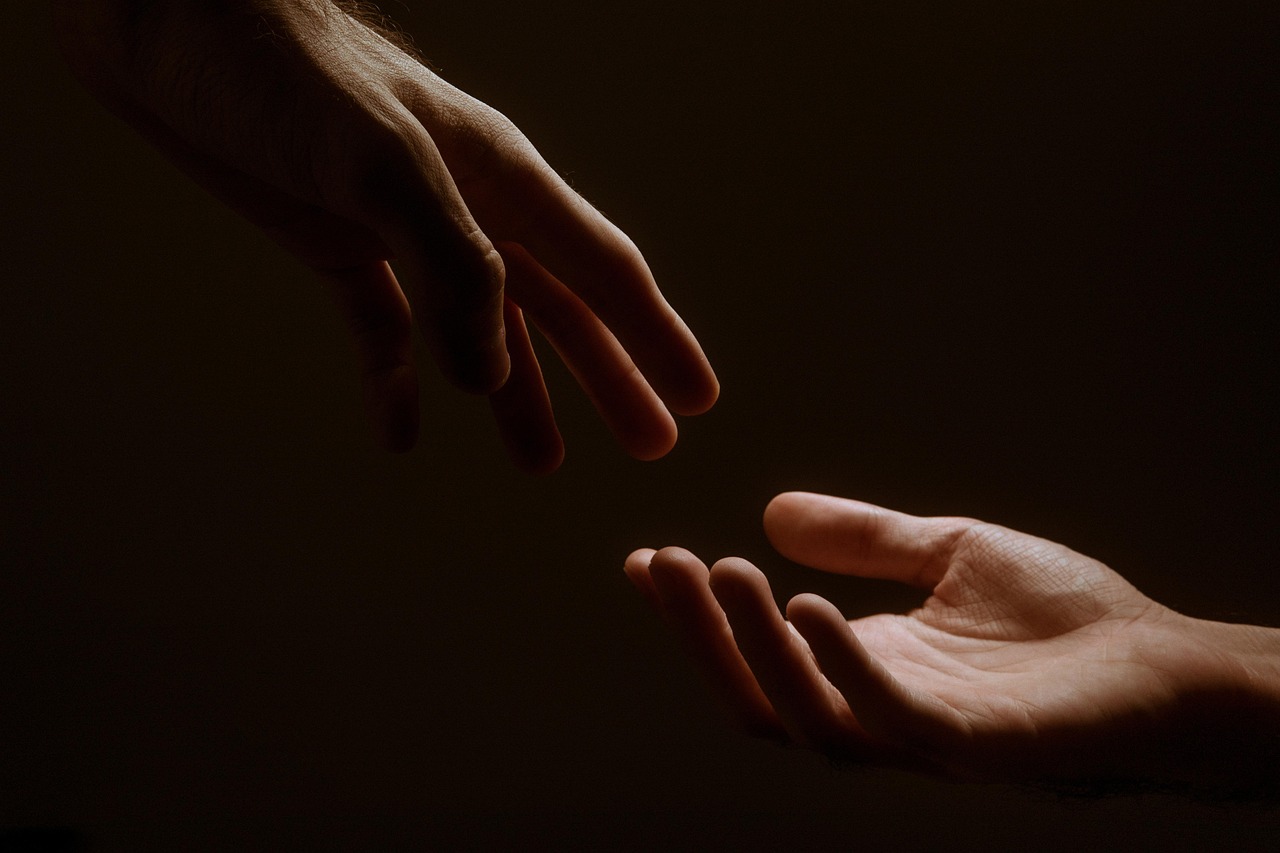
The practice aims to harmonise the subtle planes.
It accompanies whatever is seeking to readjust, supports the natural forces of transformation, and releases the charges held in the energy bodies.
No projection, no interpretation: only presence, rightness of gesture, and listening to what is calling.
Energy-work sessions bring about vibrational alignments: the hara line, energy fields, polarities, memories.
They rely on resonance, on the deep accord between the different layers of the living being.
A symptom is often the expression of an imbalance.
Reiki turns towards its root. It illuminates, lightens, releases.
It makes it possible to leave behind what has completed its cycle, and to give life back its natural flow.
Some approaches awaken curiosity. They offer a first contact.
Depth is born in living practice, in real commitment, through one's inner stance as much as through the refining of perception.
A right attitude does not rest on technique alone. It emerges from a quality of being, an aligned presence, a clear intention.
What guides me are the transformations I have witnessed, the refined perceptions, the testimonies.
My approach goes beyond the search for comfort. It touches what connects, what heals in depth.
Which Reiki?
Today the word "Reiki" covers very diverse approaches, with widely varying intentions, formats and depth.
• LaHoChi, for example, offers an initiation in a single day. This fast format can awaken a sensitivity to energy work, but leaves little room for real integration. Reiki takes time, is experienced in the body and lived in awareness: you don't learn to ski in a day.
• At the other end of the scale, Reikology seeks to give the practice standing through official standards and certifications. This institutionalisation may bring a form of recognition, but with a range of modules that, in my view, goes beyond the beautiful simplicity of Usui Reiki — it tends to drift away from the free, direct and inward spirit of Usui's teaching.
• Between these two extremes, many approaches mix Reiki, angelology and channelled messages. These so-called "new age" forms may enrich the imagination or open up perceptions, but they often add layers that blur the very essence of the practice.
• Alongside Usui Reiki, Karuna Reiki® is its natural extension: where Usui Reiki is called the "energy of awakening", Karuna Reiki® is the "energy of elevation".
I do not claim to hold the truth. I speak of Reiki as I teach it in my courses: a simple, deep path, without artifice — rooted in experience, presence and listening to what is alive.
Then comes the time for personal development and, for those who wish, the use of complementary techniques.
The techniques used support the natural processes of energetic harmony. My sessions are not limited to Reiki — Reiki is their source, and it is what you will receive in the initiations.
Sessions can accompany medical treatment by strengthening the body's resources and easing certain side effects, never claiming to replace it.
Reiki in Japan today: a living tradition and cultural discretion
A very real presence, but often overlooked
Reiki is still practised in Japan. It is in fact very much alive there, but it belongs to a culture of discreet transmission, based on experience rather than public display.
Far from commercial or formatted approaches, Japanese Reiki remains faithful to a deep vision: a path of personal transformation, inner alignment and purification of body and mind.
1. Usui Reiki Ryōhō Gakkai: the original teaching
Founded in 1922 by Mikao Usui, the Usui Reiki Ryōhō Gakkai is still active, but entirely closed to the public. Access is by recommendation only, with no public classes and no public promotion.
- Sober, quiet transmission (Reiji Hō, Hatsurei Hō, Byōsen, etc.)
- Focus on self-treatment, meditation, inner discipline and the five principles (Gokai)
- Very limited use of symbols and initiations compared with Western norms
This lineage embodies the spirit of Reiki as a path, not merely a technique.
2. Gendai Reiki Hō – the modernised version by Hiroshi Doi
Hiroshi Doi Sensei, trained within the Gakkai, created Gendai Reiki Hō in 1993, an accessible and structured version of Japanese Reiki — combining original depth with Western teaching methods.
- Open to the general public in Japan and abroad
- Combines codified techniques with meditative practices
- Keeps a living link with the traditional teaching without excessive rigidity
3. Jikiden Reiki – direct transmission at the heart of Japan
The Jikiden Reiki Institute, based in Kyoto, passes on a direct lineage from Chiyoko Yamaguchi, a student of Chujiro Hayashi (himself a student of Mikao Usui). Its seminars have been open to an international audience since the 1990s.
- Hundreds of certified Shihan (teachers) and Shihankaku (assistants) in Japan
- Regular seminars in Kyoto and Tokyo (Shoden and Okuden), limited to 6–12 participants
- Programmes including: Byōsen, Ketsueki Kōkan, the original symbols and precepts, Kotodama, purification techniques, etc.
4. Reiki and Japanese culture: a matter of reserve
In Japan, energy practices are often implicit. Reiki is sometimes taught without the word ever being spoken, within family circles, dojos or private rituals.
- The term "Reiki" is sometimes avoided so as not to evoke new age associations
- Transmission belongs to a culture of silence, respect and experience
- Its value is lived, not displayed
In conclusion
Reiki in Japan is neither forgotten, hidden nor folkloric. It simply remains faithful to its original essence: a living, grounded, quiet practice, passed on through relationship and constancy.
As a practitioner or teacher, exploring this discreet but deep dimension can enrich your own approach. It is a reminder that what matters most is lived rather than stated.